Wednesday, March 11, 2015

Caution: Toxic Paints

Cezanne
Robert Genn, the great Canadian painter, died a few months ago. His daughter Sara is reviewing his posts from the past and will rerun the most helpful. The following information was first published in 2008.


Einstein
Warhol


"Artists of the past often suffered poor physical and mental health due to the materials they worked with: lead, powdered pigment, turpentine, carcinogens, etc. We know Vincent van Gogh put paint in his mouth. Clinical pathologist Dr. Paul Wolf of the University of California cites that illnesses, rather than being obstacles, can be the paths to genius. He mentioned the likes of Einstein, Warhol, Newton, Cezanne, Goya, Michelangelo, Turner and Berlioz. According to Wolf, these folks suffered varying degrees of depression, autism, myopia, anxiety, chronic pain, gout, stroke and dementia.

Portrait of Michaelangelo by Raphael


Historically speaking, we artists have been through a hundred years where "artist" has been aligned with "nut case." It hasn't always been so. I, for one, am working to have this current connection declared null and void. Actually, clear-sighted individuals with no known diseases may be the ones who are doing most of the good work.

Today, in our "safe" world of food and drug administrations, we may not be taking as many precautions as we might. Artists like Michelangelo and da Vinci certainly knew they were working with nasty chemicals because they prepared their own. They were very much aware of lead poisoning. Indeed, the fall of the Roman Empire had a lot to do with drinking water supplied through lead pipes. But it does stand to reason that a lot of painters died early because they didn't protect themselves from the ingestion of toxic lead-based paint--particularly through their skins."


Da Vinci's self portrait in red chalk

Wednesday, March 4, 2015

Color Block Labeling for Wine

This is such a simple use of color I expect to see it on more wine labels soon.


uproot-wine-label.jpg
The Flavor Palette for Uproot Wines’ Sauvignon Blanc features a large light green block for melon, followed by a dark green block for fresh cut grass, bright green for citrus, yellow for grapefruit, and a small purple block for passion fruit.
The Flavor Palette for Rosé features red and pink blocks that are various sizes, representing the tasting notes maraschino cherry, strawberry, rose petals, watermelon, and pink lemonade.
Uproot Wines’ colorful labels which feature no text or numbers are minimalistic yet informative. Wine drinkers are directed to their website or social media platforms to find out what they mean. Then when they see the distinctive labels in future, they’ll know it’s a bottle from Uproot Wines.
This simple yet effective labelling has the potential to be adopted in other areas as well.


Gender Preferences for Colors


Find the right colors for web content writing services.
To be successful, choose the right colors.

Favorite Colors

Everyone has their favorite color. If you ask a selection of random people, you will likely get a wide range of answers, from the primary colors to various shades of those colors. Understanding a little about the types of colors that are most attractive to your prospective audience can help you design a website, or storefront that attracts more visitors. For instance, did you know the top favorite color for both men and women is blue? Using a variation of blue for your website or store offers a neutral site that appeals to both genders. However, there are other colors at the top of the list for different genders. Women are more likely to prefer purple with red and green close behind. The next two colors for men are also red and green, but purple is nowhere to be found.

Bright or Soft Colors

Another major difference between the genders is the type of color you choose. During the course of experimenting with color preferences for men and women, it was discovered that light and dark colors carried the same level of appeal among all individuals. However, women were found to enjoy softer colors, while men preferred bright colors.

Tints and Shades

The terms tints and shades are often used interchangeably. However, in the world of art, the two terms mean different things. To create a tint from a color, you must add white to lighten the color. Adding black to a color creates varying shades. Similar to the preferences between bright and soft colors, women tend to prefer tints, and men favor the darker shades.

Identifying Colors

While it plays little role in which colors you choose for your site, it can be useful to understand one of the major differences between how men and women see colors. If you show the same range of colors to a man and a women and ask what color each one is, you are likely to receive different answers. For instance, men have a tendency to see colors in simpler terms. Even when viewing several shades of red, they will call each one red. However, when you show that same range of reds to women, they are more likely to name them specifically, such as maroon, cherry and cayenne.

Wednesday, February 25, 2015

Basing Colors On A Favorite Palette

By Vicki Payne, 
The Charlotte Observer
One of the most frequent questions I’m asked is, “What color paint should I use?” I have never understood why so many people are intimidated by color. Maybe it’s because we all see color differently. Over the years I’ve tried to take some of the mystery out of color for my clients and viewers. Once you get it, using color is fun and not scary at all.
Start with a color palette. Each room in your home should flow from space to space. That doesn’t mean you can’t use color; it just means you need to think about where that color is going to be used and, most importantly, in which tone. That’s what color selecting is all about. A shade is just a lighter or darker version of a color. That isn’t the same as tone.
We’ve all tried to match one shade of beige to another shade of beige without success. Some beiges look pink, others more tan. That’s because every color has undertones. Whites can be tinted with grays, browns, black. It’s that undertone that gives a color warm or cool tones. Start by picking your base color. It has to have a tone that matches the furniture, rugs and accessories that you will be using in that space. No one can afford to start from scratch, so we have to work with what we have.
I’ve been using the same tone base color for my house for over 30 years; a warm soft gold for the walls and creamy white for the woodwork. I’ve changed the shade of gold and white but never the tone. Before I paint a room blue (or any color), I make sure it works with my base color. That allows me to move my furniture and accessories from room to room because I know they will all match. (excellent advice-BL) The gold armchair in my living room is the same tone of gold as the sisal rug that I have in my bedroom, just 2 shades darker. So if I decide to move the chair from the living room to the bedroom, it still matches because they both match my base color.
In my new house, I painted the walls and ceilings in my common spaces with Sherwin Williams Creamy. The woodwork is Pure White. But I used lots of color throughout the rest of the house: The master bedroom in Tidewater blue, another in Repose Gray, an office in Tricorn black, and the laundry room in Crystal Clear aqua with a Lily (pale yellow) ceiling — all Sherwin Williams colors. It all works beautifully together and flows from room to room, because the undertones are right on. These seven colors are my color palette. Nothing comes into my house if it doesn’t match this palette. (Blog viewers, you can go to the Sherwin Williams blogsite to see these colors for yourself-BL)
To determine your color palette, start with what it is that you love in your house. It could be the living room walls, the sofa, a rug in the hallway or your favorite dress or tie. Now start matching up the other items in your house with this “base color.” Do they look dirty, dingy perhaps too green or too blue when held next to your favorite color? If so, they’re the wrong tone for your palette and need to be replaced. Your goal is to eventually get all the colors within your home to work with the base color. Once you do, you’ll have your color palette.
Having a color palette allows you to introduce new popular colors into your existing home without the fear of making a mistake. Don’t be afraid of color. If it matches your base color, you can move from one shade of that color to another with great decorating success.

Wednesday, February 18, 2015

Color Choice in Clothing


Using your color knowledge in selecting clothes:

 Select a core color for the principle clothing items across the family.
 Use accent (second or third colors) colored clothing items from the complementary, triad, analogous or neutral families. Substituting colors from within these same families is fine.
 Determine a neutral color preference that will balance your color scheme.
Some Examples:
 Monochromatic – All one color. Pairing dark blue jeans with different shades of lighter blue tops. If going for monochromatic coordination it is beneficial to add visual interest by varying clothing textures and patterns. As such, the tops may be cable knit, or feature stripes for different color family members to add variety.
 Complementary – Using opposite colors on the color wheel. Sticking with our blue example, we could add orange accessories (jewelry, scarves, tie) to the outfits. The balance between complimentary colors needs to be carefully considered – too much of both will likely be an eyesore. If is possible to reduce this risk by using a complementary color with a paler tint, such as blue with pale gold. The "Rule of Three" might help here. Use shoe, scarf and earrings in the complementary hues.
 Analogous – Using accents in the blue green and green colors. For dad, pair a forest green jacket with blue jeans. Mom might add a blue-green scarf while the kids don an aqua cardigan and a green hat. This could work wonders in a group photo!
 Triad – Triad colors can often appear very bold, so subduing them with less intense versions is often a good idea. To our blue outfit, add pink (from the red family) or cream (from the yellow) accessories for a lovely subdued triad color theme.
 Neutral – Neutrals work well with all colors and may be worn together. Add white accent items or accessories to our blue theme for a classic nautical color theme. Consider adding beige as a neutral if your hair is a light color; black works well if your hair is dark and light grey looks super on those with white or grey hair.

I advocate hanging a color wheel in or near your closet. This is useful information to teach your spouse and/or children.

The Effect of Color on Taste

The color surrounding us as we imbibe is important, as the following article expounds.


I’ve seen several different studies examining the effect of the color of food or a beverage on how it tastes. But this is the first one I’ve seen where they’ve looked at the color of the room in which the tasting is held. This study used wine, but it would undoubtedly be the same for beer, or any other drink. It certainly makes sense that your environment would effect the experience of tasting. Or as this short article in Drinks Business puts it, the “environment in which you experience a wine has a ‘profound’ effect on how you will perceive it to taste.” The study, conducted by Charles Spence, a professor of experimental psychology at Oxford University, concluded that “Lighting and music can act as digital seasoning for food and wine.” I”m not quite sure about sound, but perhaps. Anyway, it brings up all sorts of possibilities about how we taste, and where. I’d certainly like to see more of this kind of research.
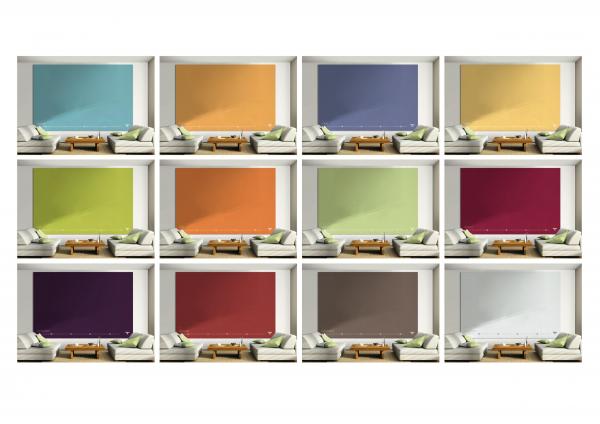
colored-rooms
Be careful what room you drink in, especially what color it is.
Guess we will have more information on which are the favorable colors for enhancing our tasting experience. BBL

Wednesday, February 11, 2015

Color Preference by Gender

Color Preferences by Gender

Perceived appropriateness may explain why the most popular car colors are white, black, silver and gray ... but is there something else at work that explains why there aren't very many purple power tools?
One of the better studies on this topic is Joe Hallock's Colour Assignments. His data showcases some clear preferences in certain colors across gender.
It's important to note that one's environment--and especially cultural perceptions--plays a strong role in dictating color appropriateness for gender, which in turn can influence individual choices. Consider, for instance, this coverage by Smithsonian magazine detailing how blue became the color for boys and pink was eventually deemed the color for girls (and how it used to be the reverse!).
Here were Hallock's findings for the most and least favorite colors of men and women:
The Psychology of Color in Marketing and Branding
The most notable points in these images is the supremacy of blue across both genders (it was the favorite color for both groups) and the disparity between groups on purple. Women list purple as a top-tier color, but no men list purple as a favorite color. (Perhaps this is why we have no purple power tools, a product largely associated with men?)
Additional research in studies on color perception and color preferences show that when it comes to shades, tints and hues men seem to prefer bold colors while women prefer softer colors. Also, men were more likely to select shades of colors as their favorites (colors with black added), whereas women were more receptive to tints of colors (colors with white added):
The Psychology of Color in Marketing and Branding
Image credit: KISSmetrics
The above infographic from KISSmetrics showcases the disparity in men and women's color preferences.
Keep this information in mind when choosing your brand's primary color palette. Given the starkly different taste preferences shown, it pays to appeal more to men or women if they make up a larger percentage of your ideal buyers.