Wednesday, June 17, 2015

Store Color Affects Your Shopping

How many of us notice the wall colors in the stores where we shop? I was guilty of ignoring it until I read the following article. I feel the more insight we have about retailers' use of color to influence our purchases, the better equipped we are to resist impulse purchases. It keeps money in our pocketbooks when we are aware!


Shoppers most often choose what they buy based on color. In fact, it can account for up to 85 percent of the reason people buy one product over another, according to the Color Marketing Group, a professional organization for color designers in Alexandria, Va.
Color's influence on consumer behavior isn't confined to just merchandise. The colors surrounding customers while they're shopping also can influence whether they make a purchase. "Colors in a store format can create different emotions and store retailers can use that," says Rich Kizer, a St. Charles, Ill.-based retail design consultant.
Here are five ways store colors can affect the shopping experience and help turn browsers into buyers:
Five Ways Store Colors Can Influence Shoppers
Quiltique in Henderson, Nev., is decorated in an antique garden theme, with found objects like chairs and window frames providing accent colors.
Photo by Quiltique
1. Tell a story with color. Rather than simply select colors you like, it can be more effective to start with a theme and choose colors that represent that concept. For example, you could capture the essence of the beach with colors reminiscent of sand, water and sunshine. That would transport customers to an environment they associate with relaxation and enjoyment and make them want to stick around your shop longer.
"There are hardwires we have about colors," says Jill Morton, a Honolulu-based color psychologist and brand identity expert. "Blue is associated with water, green with grass, red is fire."
When Jennifer Albaugh chose a color scheme for Quiltique, her Henderson, Nev., sewing and quilting supply shop, she first decided on the theme of antique gardens. This prompted her to find colors that suggested garden spaces, rather than pick random paint swatches at the hardware store. She painted her walls celery green and used a brick red accent to call to mind foliage and garden pots.
Five Ways Store Colors Can Influence Shoppers
Accessories from the Heart in Oswego, Ore., uses a burnt orange color for the walls and floor to create a warm, welcoming environment.
Photo by Sarah Fenwick
2. Comfort and calm customers.Warm colors like oranges and browns are inviting and reassuring to shoppers, while cooling colors like green and blue can have a calming effect, says Georganne Bender, a partner and retail consultant with Rich Kizer.
"Orange makes you happy," she says. And happy customers are more likely to linger longer in your store. When Carol Winston moved her Lake Oswego, Ore., women's shop, Accessories From The Heart, to a new location, she decided to change the white walls to burnt orange. At night, under the store's halogen lighting, the interior gives off a warm calming glow.
"When it gets dark, the store looks like a jewelry box," Winston says. "It's really inviting." 
3. Alert your shoppers to certain products. Bright colors like yellow and red grab customers' attention, stopping them in their tracks before they breeze by a product display. That's because yellow is the color first perceived by the retina, according to Linda Cahan, a West Linn, Ore., retail design consultant. Red, of course, has long been associated with stopping, whether it's on a traffic signal, emergency vehicle or store design.
"People buy more when there is red," Cahan says.
But use these bold colors sparingly. Too much red will agitate shoppers, Bender warns. She recommends making bright accent colors no more than 20 percent of your store's overall color scheme.
Five Ways Store Colors Can Influence Shoppers
Wet Nose's periwinkle logo color is brought out in the store design, from the color of the ceiling to decorative ribbons around products.
Photo by Wet Nose
4. Build brand recognition. Colors can increase brand recognition by 80 percent, according to a 2007 study by psychology and management researchers at the University of Loyola, Maryland. Finding a way to work your logo colors into your retail design will help customers associate those colors with your company. But think beyond just the paint on your walls.
At Wet Nose, a pet shop with two locations in the Chicago area, owner Sheila Spitza draws inspiration from the shop's periwinkle logo. The ceiling is painted a rich purple, while merchandise tags, business cards and tissue paper match the lighter purple of the logo. A customer once told Spitza she spotted a little girl at a party wearing the shop's decorative periwinkle ribbons around her pigtails.
"I wanted to use a color that was unique and could be identified with Wet Nose," Spitza says.
5. Highlight rather than overpower your product. Be careful not to drown out what you're selling by immersing it in too much color. "In retail, you want the merchandise to pop and not the surroundings," Bender says.
If you are selling lingerie, for example, bold colors could work against the delicate quality of the product. Similarly, if you are selling electronics, too many bright, flashy colors can detract from your product's clean sleek look. Because Quiltique sells particularly busy and bright patterns, Albaugh limited the store's main color scheme to celery green and brick red to avoid overpowering the quilts on her walls. She worked other colors in more subtly by using found objects like a distressed turquoise bookcase and yellow antique gate as display pieces—all in keeping with her antique garden theme.
"You don't want to have explosive color [that] is irritating to the customer," she says. "We incorporate bright cheerful colors…It brings so much life to the store."


Jane Porter is a freelance writer and editor based in Brooklyn, NY. You can find more of her work at Janeroseporter.com

Wednesday, June 10, 2015

Scale Affects Our Emotions

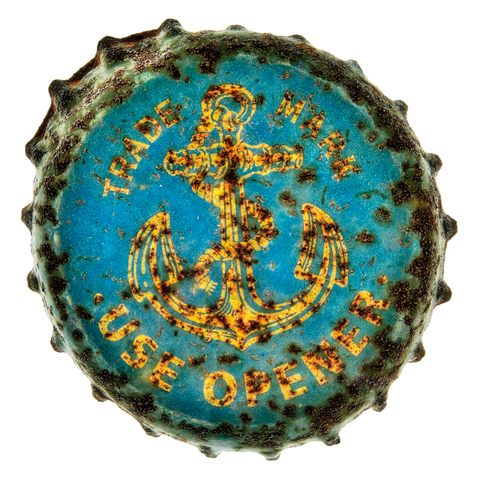
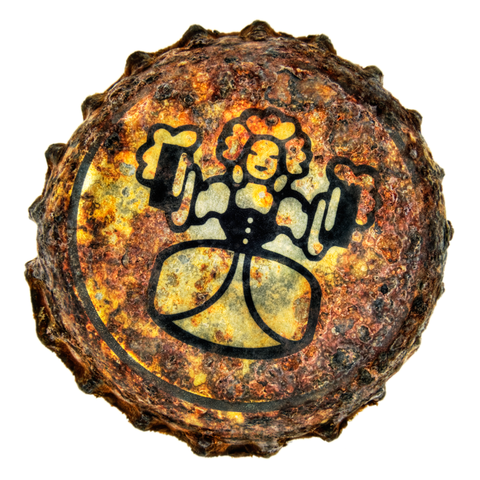
An ingenious photographer had a brainstorm about enlarging the art on beer bottle caps, rust and all. There is something about large, familiar items that draws us in emotionally and many artists have capitalized on this phenomenon. Andy Warhol was one of the first to catch on to this trick.

Imagine these prints hanging above your bar. Many have excellent icon art, they are easy to recognize, and certainly deserve more than a quick glance.

I have known several collage artists who collect bottle caps and use them in their mixed-media art works. My kudos to the clever photographer who thought to blow up the miniature works of art. Now, I will study tiny throw aways to appreciate their artistic merit.


Rusty Crowns As Art


anchor-rusty-cap
I meant to write about these before, but they got away from me. British photographer — and current Bay Area resident — Charly Franklin is making some amazing art … with rusty beer caps. And not just rusty, but “rusted, bent, discolored and generally distressed.” He’s taking very detailed photos of these crowns and blowing them up large, over three feet in some cases, which gives them almost an otherworldly appearance. Or in Charly’s own words, an “extraordinary quality and graphic dynamic that looks amazing.” And I have to agree. The patina of the rust, along with the colors and texture of the bottle caps looks really cool. Check out some samples.
Here’s a black crown from Lagunitas:
rusty-crown-lagunitas-black
And one from Anchor:
rusty-crown-anchor
Check out the catalog of over 200 different available crowns from breweries around the world, but with quite a few from California and many craft breweries.
Here’s one from Trumer:
rusty-crown-trumer
And other of Sierra Nevada’s Hoptimum:
rusty-crown-hoptimum
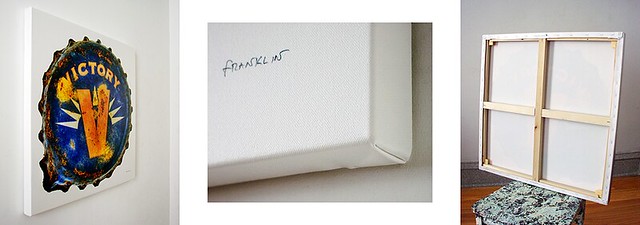
Prints are available on framed canvases, in five sizes, including 18×18, 24×24, 30×30, 36×36 and 40×40 inches. Shipping is free within the U.S.
rusty-crown-framed
Finally, here are two more, starting with Bear Republic:
rusty-crown-bear-republic
And here’s Drake’s:
rusty-crown-drakes

Wednesday, June 3, 2015

Art History 101: Georgia O'keefe and the Influence of Zen Buddhism

Georgia-O-Keeffe-Portrait.jpg - Photo by Fred Stein/Archive Photos/Getty Images
Portrait of Georgia O'Keeffe(1887-1986).  Photo by Fred Stein/Archive Photos/Getty Images
Georgia O'Keeffe (Nov. 15,1887-March 6, 1986) is most well-known for her large-scale paintings of flowers as well as for her paintings from New Mexico of the landscape, sunlight, and natural forms of the American southwest - rolling hills, sun-bleached animal bones, wildflowers. Although following a singular vision, she was influenced by the culture and times in which she lived, both in what she rejected and in what she absorbed and embraced. 
Influence of Zen Buddhism
O'Keeffe rejected the traditional realism that was being taught in art school at the time and turned instead to a more abstract style, which although still based on representation,enabled her to express her feelings about what she was painting.  Japanese Art and Zen Buddhism played a large role in her approach to her art.


According to the PBS website, Georgia O'Keeffe, About the Painter/American Masters/PBS,  "Teaching in South Carolina was Arthur Dow, a specialist in Oriental Art. Dow’s interest in non-European art helped O’Keeffe move away from the forms she had found so stifling in her previous studies. She said of him, “It was Arthur Dow who affected my start, who helped me to find something of my own.”  O'Keeffe had abandoned making art in her early 20's because it had no meaning for her, and it was the influence of Dow that brought her back to painting.
In her revealing, insightful, and thoroughly engaging book, How Georgia Became O'Keeffe: Lessons on the Art of Living, author Karen Karbo writes;
"Enchanted by the simplicity of Japanese art, and the voluptuous lines and shapes of Art Nouveau, Dow had tossed the dusty plaster casts aside and asked his students, on the first day of class, to draw a line on their paper, thus beginning the process of defining the space.  This was pure radicalism in 1912. It was the beginning of modernism, a declaration of independence for the artist. "I had stopped acting when I just happened to meet him and get a new idea that interested me enough to start me going again," said Georgia, in a letter to a friend." 

O'Keeffe carried the influence of Zen Buddhism throughout her life in the way she lived and in the subject matter of her paintings.  She loved to paint the objects and organic forms of nature, and lived a contemplative life, often taking long walks alone in the landscapes she loved.
Another well-researched and insightful book,The Influence of Zen Buddhism on the Art of Georgia O'Keeffe, by Sharon Fitzgerald, traces the history of the influence of Zen Buddhism on American culture during the early 20th century, and on Georgia O'Keeffe, herself, through her teacher Arthur Dow and others. One of the concepts O'Keeffe learned about and used in her paintings was Notan, the Japanese concept about the balance of light and dark.  After taking art lessons with Dow, O'Keeffe was no longer tied down to imitative realism, but rather, was freed to express her own ideas and feelings in her drawings and paintings.  When famed photographer and gallery owner Alfred Stieglitz first saw these expressive drawings of O'Keeffe, he was immediately moved by their power and energy and shortly thereafter, in 1916, exhibited them in his New York City art gallery.

An example of Arthur Dow's painting style

Wednesday, May 27, 2015

The Biology Behind Human Skin Color

This fascinating subject is explained so clearly in the following article. It makes me wonder if fair-skinned people using sun block regularly would change skin color if they stopped using it. And, I am not talking about getting a sunburn which gives a short-lived pink tint to light skin.

I remember the cod liver oil. Mom fed it to me almost religiously. “It’ll make your bones strong,” said she, “so you don’t get rickets.” Even after she described rickets, I could not really envision the condition.
But I’ve seen plenty of photos of it since and learned that it is tied up with climate and the color of one’s hide. So let’s go there.
The first thing to realize is that skin color is a tough subject to study. One can’t just use people’s faces — they’re too subject to color alteration due to sun and weather, even tanning or whitening agents. So researchers have settled on using comparisons from one body area not much exposed to those effects: the color of the inner upper arm. Unless you’re an expert on those, be a little tentative about what you think you know about human skin colors.
The second point is that the genetic basis of color is not simple either. We’ve got a few genes identified which have major effect, but there are others with minor effects and we don’t yet have detailed gene sequencing studies to resolve the issue.
In addition to all this, the subject has been so politically explosive that few researchers want to get involved. One major exception is Nina Jablonski of Pennsylvania State University who has spent more than 20 years on the subject. Others have joined in, but I rely here mostly on an article in the November 21, 2014 issue of Science featuring her work, and her 2012 book "Living Color."
Humans make two major types of skin pigment: Eumelanin gives the browns and blacks of darker-pigmented people. Pheomelanin gives various shades running from yellow to red. All people except albinos have both these pigments, and the relative amounts thereof account for the color differences of peoples worldwide. And these are not reliable indicators of “race” — a term which has no objective value at all. There is more color variation within each of the traditional “races” than there is between them, and color is useless as a categorical term.
But there are geographical patterns, of course. Peoples living near the equator are more darkly pigmented, and among those groups (as elsewhere, e.g., Tibet, Bolivia) those living at high altitudes or near the oceans have the higher levels of eumelanin. In contrast, peoples living farther from the tropics have the highest levels of pheomelanin and are light-skinned, with yellow or red hair common. Similarly, peoples with higher eumelanin ratios have the greatest ability to tan — not always obvious with the already dark pigmentation — and those with higher amounts of pheomelanin are most likely to sunburn. Tanning is a property of eumelanin production.
Humans, according to overwhelming evidence, began in Africa. Our ancestors there probably had dark pigmentation. As peoples moved elsewhere in the world (the great “human diaspora”), nature progressively selected pigment variations (reduction, some re-acquisition) that best fitted their new environments. That takes at least a score or more thousand years. So now let’s go to the biology.
Ultraviolet radiation (UVR) from the sun is of course most intense in equatorial regions.  It is more intense at high elevations. And it reflects much more from water surfaces than from terrestrial environments, so persons living on the ocean coasts are exposed to more than those living inland.
UVR generates Vitamin D in the skin. We need that for bone strength, a good deal of immune system function, heart health, and other basic body functions. Too little Vitamin D and children get rickets -- adults are subject to osteoporosis and other diseases.
But one can get too much sunlight as well. Sunburn is an obvious condition, and that relates to higher rates of skin cancers. But UVR also appears to destroy folate, well-established as critical for neural tube development in developing fetuses. So nature has to balance the UVR level that produces healthy bones while not generating so much that it destroys folate and causes conditions such as spina bifida. Tanning is helpful for this in peoples of moderate skin color. They live primarily in areas of seasonally-variable UVR: intense amounts in the summer, much less in the winter. Tanning thickens the skin and generates eumelanin production in summer and reverses that process in winter.
Human migrations, particularly in the last 400 years, have produced many “mis-matches” — people living in areas and in cultural conditions for which their bodies are not adapted. It was high levels of rickets and tuberculosis among freed African slaves who moved into America’s northeastern states after the Civil War that produced studies to demonstrate that they were not getting enough Vitamin D for healthy bones and immune systems.
Cod liver oil solved the problems, and helped even lighter-pigmented people in temperate zones who may have not gotten enough Vitamin D in winter.

Wednesday, May 20, 2015

Grey vs. Gray


Russian Blue loving a turtle , twin of our late Genie 
A reader asks,
Would you please explain the variation in spelling of the word gray vs. grey?
Short answer: gray is standard American spelling and grey is British spelling for the same color.
The spellings have bounced back and forth.
The Old English stem was spelled grǣg.
According to the OED, ”The variation between spellings in eiey, etc., and in aiay, etc., in later Middle English results from the general Middle English merger of the ei and ai diphthongs.” Examples of spellings that evolved from the merger are claygraygrey, and whey.
In Dr. Johnson’s 1755 dictionary, the entry for the adjective is spelled gray: “white with a mixture of black.”

A Russian Blue relaxing on writer's desk

A note in the OED describes an informal inquiry made in 1893 that found differences among the usage of British publishers:
the printers of The Times stated that they always used the form gray; Messrs. Spottiswoode and Messrs. Clowes always usedgrey; other eminent printing firms had no fixed rule. Many correspondents said that they used the two forms with a difference of meaning or application: the distinction most generally recognized being that grey denotes a more delicate or a lighter tint than gray. Others considered the difference to be that gray is a ‘warmer’ colour, or that it has a mixture of red or brown.’
Various attempts have been made at different times to establish different colors for gray and grey. Here’s one from 1867:
G. W. Samson Elem. Art Crit. v. i. 483. Professional, if not primitive English usage has made a distinction between gray andgrey. The spelling gray may with propriety be employed to designate admixtures in which simple black and white are employed. The form grey may indicate those admixtures which have the same general hue, but into which blue and its compounds more or less slightly enter.
Individuals may prefer one spelling to the other, but the rule is, American spelling gray; British spelling grey.

GraceTheGreyhound.jpg

Note: The grey in greyhound has nothing to do with the animal’s color. The OED tells us that this grey is “apparently a first element cognate with Old Icelandic grey, “bitch.” The Old Icelandic word for a female dog is greyhundr. In English the word came to mean a particular kind of dog:
A breed of fast-running, keen-sighted dog having a long slender body and head and long legs, long used in hunting and coursing, and now used in racing; a dog of this breed.

Color note: Grey/gray in decor is a very depressing color according to color psychologists. Imagine  living in overcast, rainy skies perpetually; to me, not a happy thought. BBL

Wednesday, May 13, 2015

Building a Wardrobe Inspired by A Painting

Vincent van Gogh was a master colorist. One of my favorite fashion sites is titled The Vivienne Files. The blogista, Janice Riggs, is a genius at choosing clothing capsules which make terrific ensembles, but her post from December 2012 is still a classic, mainly because she uses one of my favorite Van Gogh paintings as the starting point. What a smart way to put together a good looking, classic outfit. See more of her "Start with Art" capsules at www.theviviennefiles.com. She has been inspired by many paintings.

 Vincent Van Gogh's Les Bateaux brings together

sand, sky, and deep water - the perfect juxtaposition of 
cool and warm colors...


C'est bonne, n'est pas? BBL

Wednesday, May 6, 2015

Color Views of Cultures-Chinese Tradition


Chinese Tradition

As far as tradition in China is concerned, there is no such thing as a color system as a Western dictionary would define it. In the Western world, Aristotle, for example, had attempted to find a harmony of colors. The Chinese strove toward similar interpretations, and between the 4th and 2nd century oriented themselves on the same pentatonic scale that dominated their music. Accordingly, they accepted that in its entirety color harmony comprised five basic colors: the four cardinal points are defined by red in the south, standing for summer and fowls and poultry; green lies to the east and represents spring, wood and the dragon; black is to the north and stands for winter, water and the tortoise; white is placed in the west and represents autumn and the tiger. Yellow, on the other hand, is allocated a special place and is therefore discussed in more detail. (Detailed text)

Chinese tradition regards mankind, society and the world equally, as the objects of a global knowledge — a knowledge which incorporates the macrocosm and the separate microcosms it contains.
In the illustration, the five basic colors of the Chinese tradition are arranged according to their equivalents:
Red: fire, reaching upwards, corresponds to the south as dictated by the traditional Chinese cardinal points, and coincides with the warm season of summer.
Black: water, delving into the depths, is in the north. Its season, winter, is marked by the absence of water, which at this time gathers in the northern shallows of the world».
Green: wood, is in the east and relates to spring. Green, the color of spring, is also the color of the world of plants.
White: metal, is in the west, with its season autumn with white as its color — a white with a blue tint. Incidentally, contrary to Western color-systems, black and white are part of the same circle in Chinese color-systems.
Yellow: earth. In the code of the five elements, the earth has a carrying, supporting function, and thus also assumes the function of primary source and nutrition: the plants sprout from the earth, from where fire, too, breaks out; metals are extracted from its mines, and water flows from its wells. The earth is the center — the color yellow; its taste is sweet, and its aroma is that of perfume. Mankind as the yellow race, the inhabitants of this world, stems from this equivalent.
.
The armored animals like the tortoise, which correspond to the north, water and the colour black, procreate the scaled animals like the dragon, which are always green, since these belong to wood and are located in the east. The scaled animals in turn create the fowls and poultry, to which the south and the colour red are ascribed. The feathered birds in turn create the fur-covered animals, such as the tiger or the horse, which are associated with the west, the metals and the colour white.
Water brings forth wood, and wood nourishes the fire. Fire (ash) fertilizes the earth, and the earth brings forth metals. Metal creates water.


Date: Uncertain
Bibliography: J. Needham, «Science and Civilisation in China», Cambridge University Press; Collin A. Ronan, «The shorter Science and Civilisation in China», Cambridge University Press, from 1978; Institut für Geschichte der Naturwissenschaften der Chinesischen Akademie der Wissenschaften, «Wissenschaft und Technik im alten China», Birkhäuser, Basel 1989.